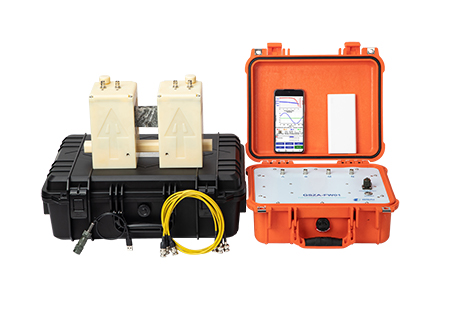
Connecting with Central Asia, Advancing Exploration Innovation | GSAI at GEOMIN 2026
Connecting with Central Asia, Advancing Exploration Innovation | GSAI at GEOMIN 2026
From 14 to 16 September 2026, GEOMIN 2026 was held in Tashkent, Uzbekistan. A team from Giant Sequoia AI Technology (Changsha) Ltd. (GSAI Geophysics) attended the conference, joining professionals from the mining, geological exploration, geophysics, research and technical-service communities to follow emerging technologies, methods and trends in mineral exploration.
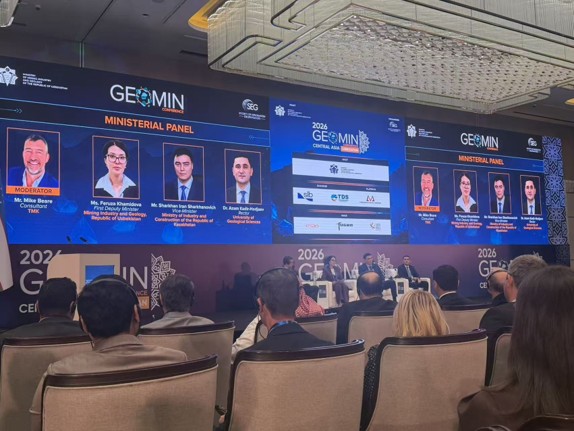
Under the theme “Advancing Mineral Exploration Through AI and Digital Transformation,” GEOMIN 2026 brought together discussions on critical minerals, mineral systems, geophysical exploration, digital geoscience, artificial intelligence and data-driven mineral targeting, providing a professional platform for exchange and collaboration across the global mining and geoscience sectors.
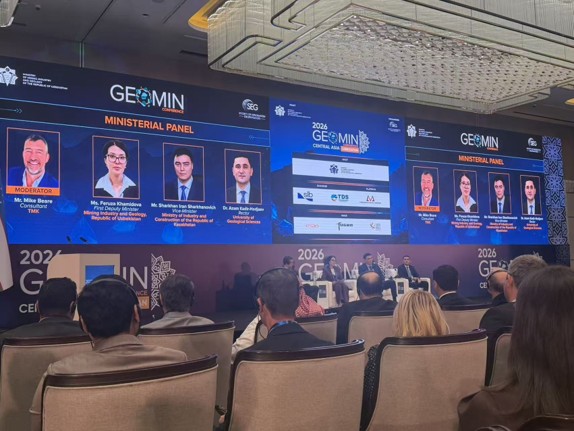
Exploring the Frontiers of Mineral Exploration and Emerging Industry Trends
As mineral exploration continues to move toward greater depths, concealed targets and increasingly complex geological settings, improving mineral targeting, obtaining more reliable subsurface information and using digital technologies to increase exploration efficiency have become shared priorities across the industry.
GEOMIN 2026 covered a broad range of technical themes, including critical-mineral exploration, regional mineral systems, emerging geophysical methods, multi-source data integration, digital geoscience platforms, and the application of AI and machine learning to mineral targeting. Throughout the conference, experts, mining companies, geological survey organizations and technology providers from different countries and regions shared technical developments and practical experience addressing real-world exploration challenges.
For GSAI, which has long focused on geophysical exploration equipment and applied technologies, the conference offered an important opportunity to follow international industry developments and gain a deeper understanding of exploration requirements across different regions. These insights provide useful reference for future product development, technology deployment and support for international markets.
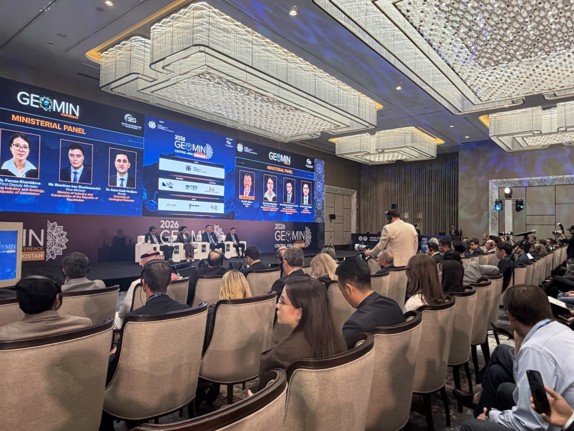
From Geophysical Methods to Real-World Exploration Challenges
Geophysical methods are among the key technical tools used in deep mineral exploration. Across different deposit types and geological settings, exploration programs often need to consider target depth, host-rock physical properties, electromagnetic interference, terrain conditions and the availability of existing geological information.
Drawing on GSAI’s experience in spread-spectrum induced polarization, electromagnetic exploration, rock-physics testing, data processing and interpretation, the team paid particular attention to advances in the application of geophysical technologies to deep mineral exploration, integrated multi-parameter surveys and data acquisition in challenging environments.
At the same time, artificial intelligence, data integration and digital workflows are gradually reshaping conventional mineral exploration. A key area for continued exploration is how to combine high-quality geophysical observations with geological information, petrophysical parameters and intelligent algorithms while maintaining the quality and reliability of the original field data.
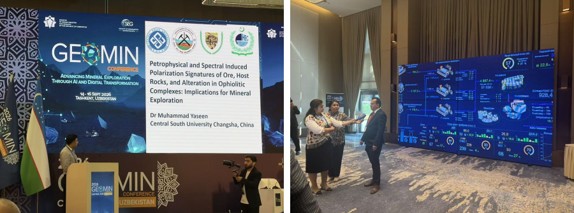
Face-to-Face Exchange: Building Connections and Exploring Future Opportunities
Beyond access to industry information, one of the most valuable aspects of an international technical conference is direct, face-to-face exchange. GEOMIN 2026 brought together professionals from mining, geological exploration, research and technology organizations across different countries and regions, creating valuable opportunities for GSAI to engage directly with industry peers.
During the conference, the team gained a better understanding of practical needs in exploration equipment, geophysical applications and project services through technical discussions, industry exchanges and visits. For GSAI, these conversations were not limited to introducing individual instruments. They focused more broadly on real application scenarios, including the selection of geophysical methods under different geological conditions, data-acquisition quality, adaptability to challenging environments and technical support requirements.
Each discussion around a specific project need brings the R&D team closer to field realities and helps establish connections for potential future technical collaboration and project support.
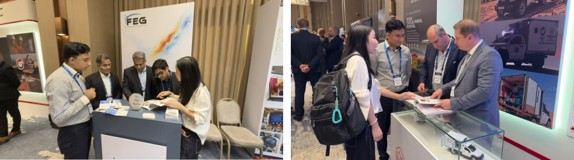
Engaging with the Central Asian Mining Market and Strengthening International Connections
Central Asia is rich in mineral resources and has become an increasingly important region for international mineral exploration and resource development. Through this visit to Tashkent, the GSAI team gained a closer view of exploration developments in Uzbekistan and the wider region while expanding its connections with professionals across the international mining, geology and geophysics communities.
For a Chinese geophysical-instrument company, entering international markets involves more than bringing equipment to new countries. It also requires an understanding of local geological conditions, field practices, project organization and technical requirements, supported by reliable products, professional technical assistance and sustained field service to build long-term relationships.
This is also an important direction in GSAI’s continued international development.
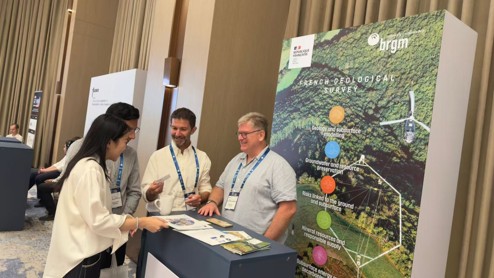
From Technical Exchange to Long-Term Collaboration: Continuing to Grow in International Mineral Exploration
From Tianjin, China, to Tashkent, Uzbekistan—from a domestic mining-industry platform to an international mineral-exploration conference—GSAI is using more face-to-face industry engagement to better understand the real needs of different markets, exploration areas and customers.
Looking ahead, Giant Sequoia AI Technology (Changsha) Ltd. will continue to advance technology development and product iteration in spread-spectrum induced polarization, electromagnetic exploration, rock-physics testing, the Internet of Things and intelligent data processing. GSAI will also further strengthen exchanges and cooperation with mining companies, geological survey organizations, universities and research institutions, and geophysical technical-service partners in China and internationally.
GSAI aims to build on reliable geophysical equipment while remaining focused on solving practical exploration problems. By bringing instruments, methods, data and technical services more closely together, the company seeks to provide more targeted technical support for mineral exploration projects across different countries and regions.
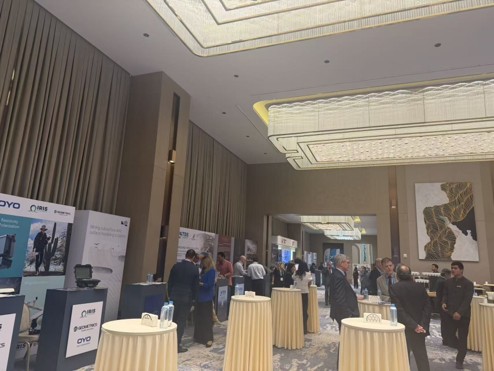
GEOMIN 2026, Tashkent.
We appreciate every professional exchange made possible by the conference, and thank every industry colleague who shared experience, needs and ideas with the GSAI team.
Connected through dialogue. United by technology.
GSAI looks forward to staying connected with mining, geology and geophysics professionals around the world and exploring further opportunities for collaboration in real mineral-exploration projects.
-
 Connecting with Central Asia, Advancing Exploration Innovation | GSAI at GEOMIN 20262026-10-13
 -
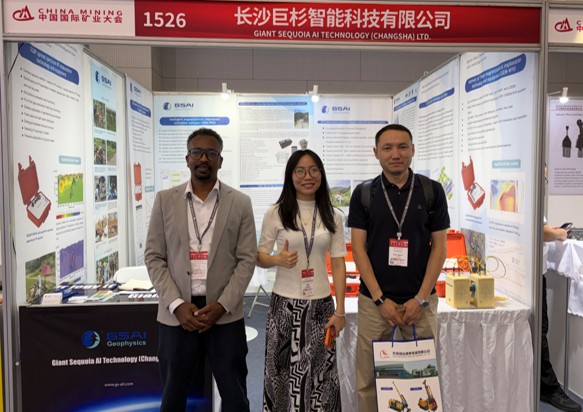 GSAI Concludes a Successful Showcase at the 2026 China International Mining Conference Connecting Global Mining Through Geophysical Innovation2026-10-13
 -
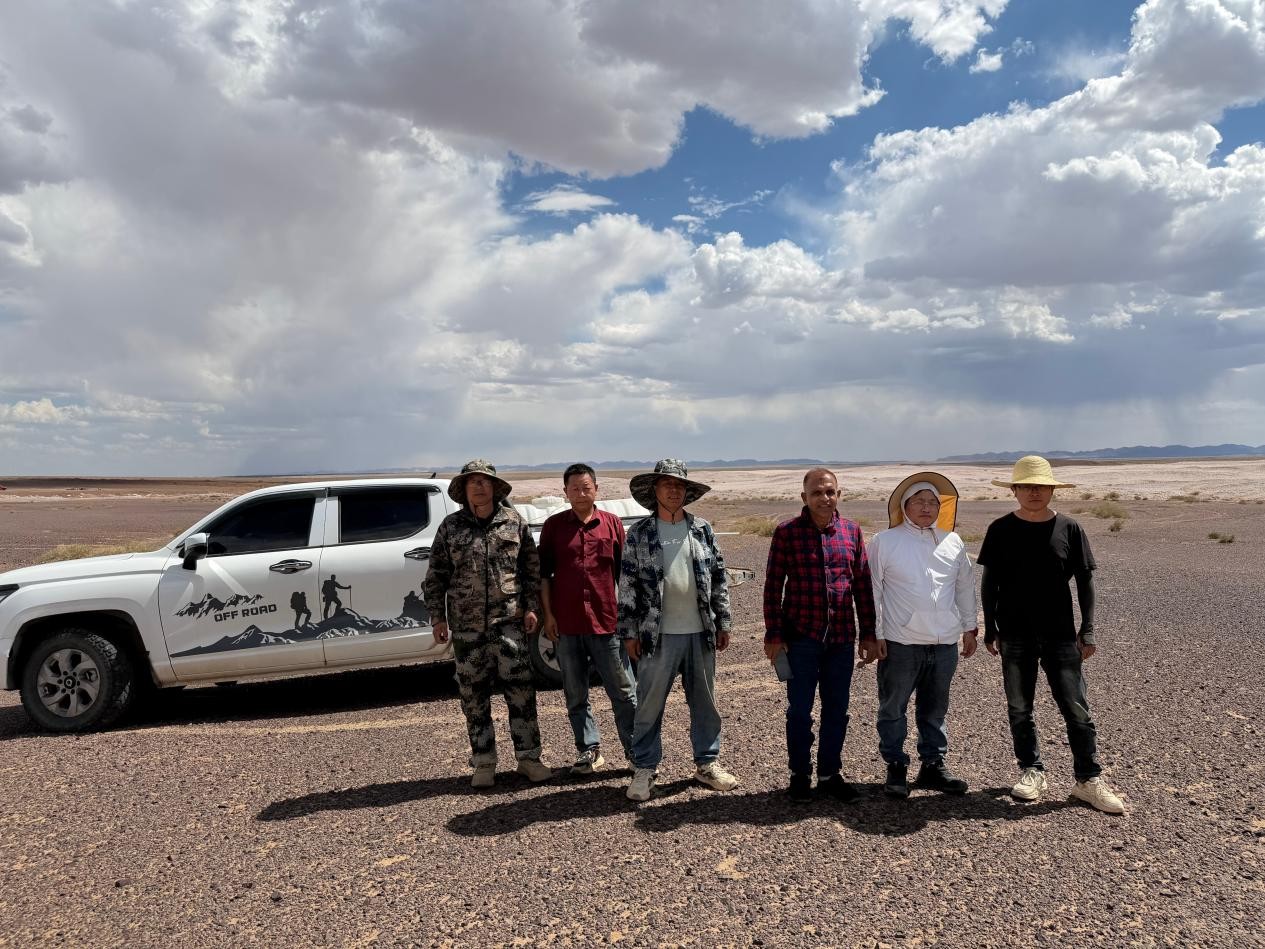 Sri Lankan Mining Delegation Visits GSAI Geophysics, Opening a New Chapter in China-Sri Lanka Cooperation in Geophysical Exploration and Scientific Research2026-08-01
 -
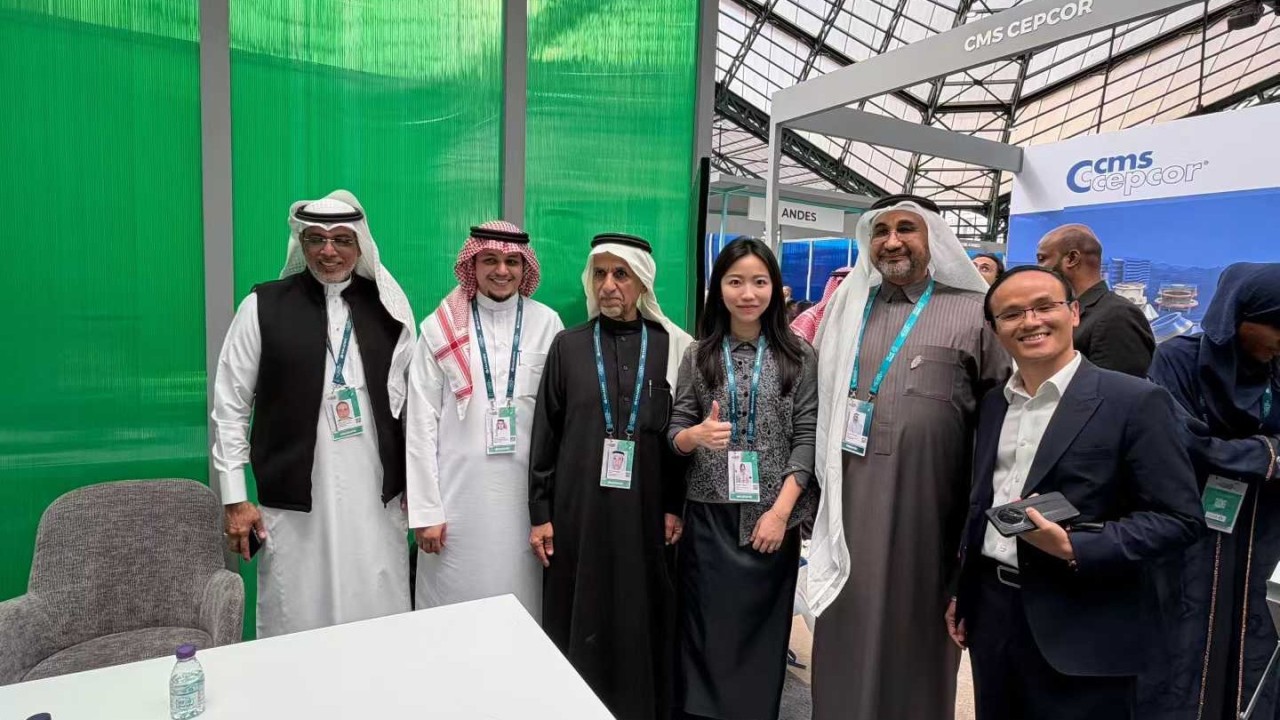 GSAI Geophysics Participates in FMF 2026 in Riyadh, Strengthening Cooperation in the Middle East2026-01-23
 -
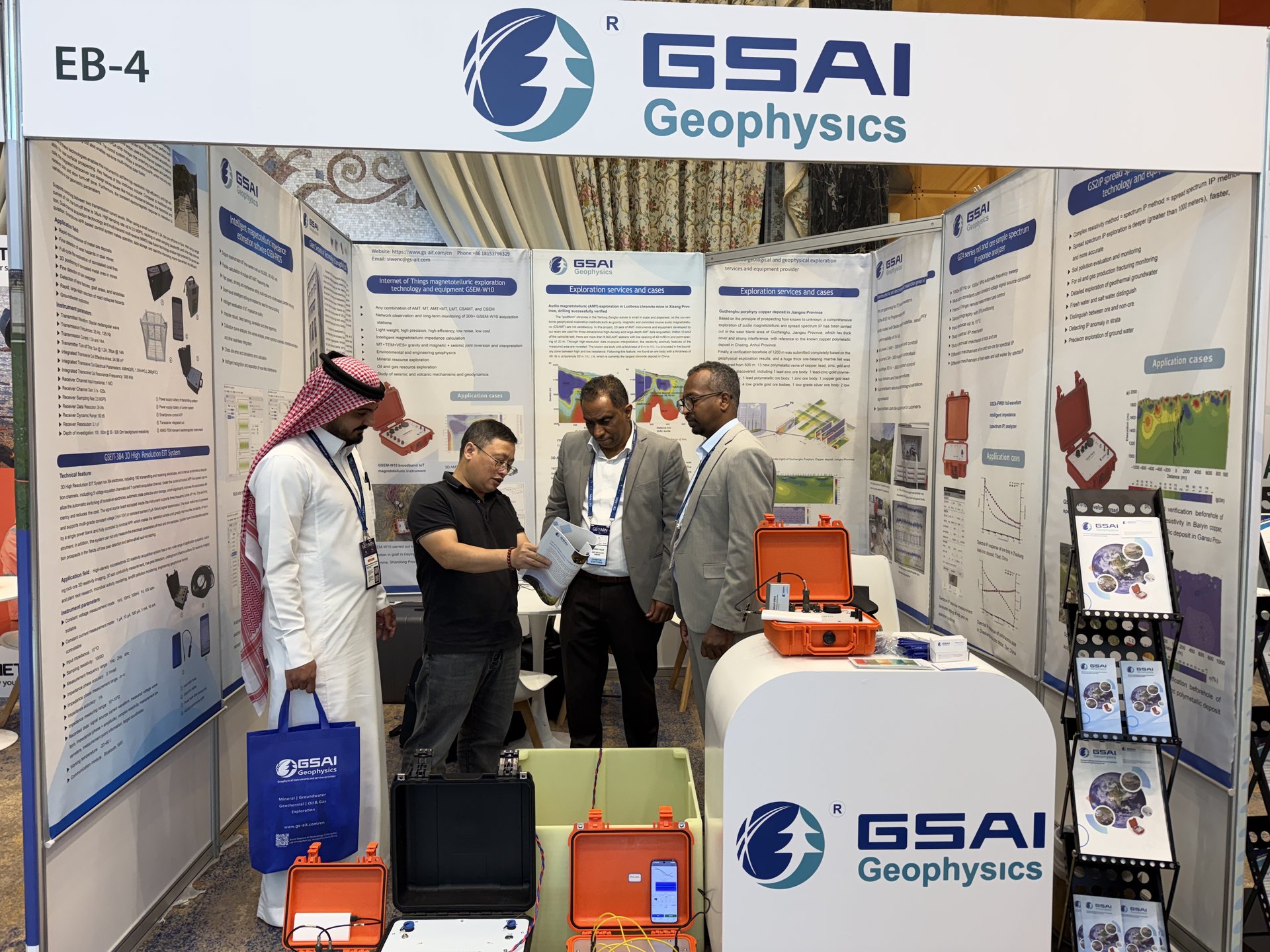 GSAI Geophysics Showcases Innovation and Global Vision at GEOMIN 2025, Saudi Arabia2026-01-23
 -
 Gold Award! Integrated Multi-Method Geophysical Exploration Drives Breakthrough in Graphite Prospecting2026-01-20
-
 New Technology: Analysis of Mineral Prospecting Effectiveness Using Spread Spectrum Induced Polarization (SSIP)2024-11-13
 -
 Exploration and breakthrough of anti-interference AMT/MT and spread spectrum IP -- A report of Chen Rujun, School of Geosciences and Info-physics, Central South University2024-01-19
 -
 Chen Rujun: Interpretation of deep secret exploration of unknown treasures2023-12-26
 -
 For the first time, the spread spectrum IP method was successfully introduced into the accurate detection of hidden fire source in Chongqing Research Institute of China Coal Science2023-12-25
 -
 Wu Bin, Gu Xiangping et al. : The discovery of a new rare earth carbonate mineral, C-Pb lanthanide2022-05-04
 -
 The 6th International IP Workshop2022-05-03